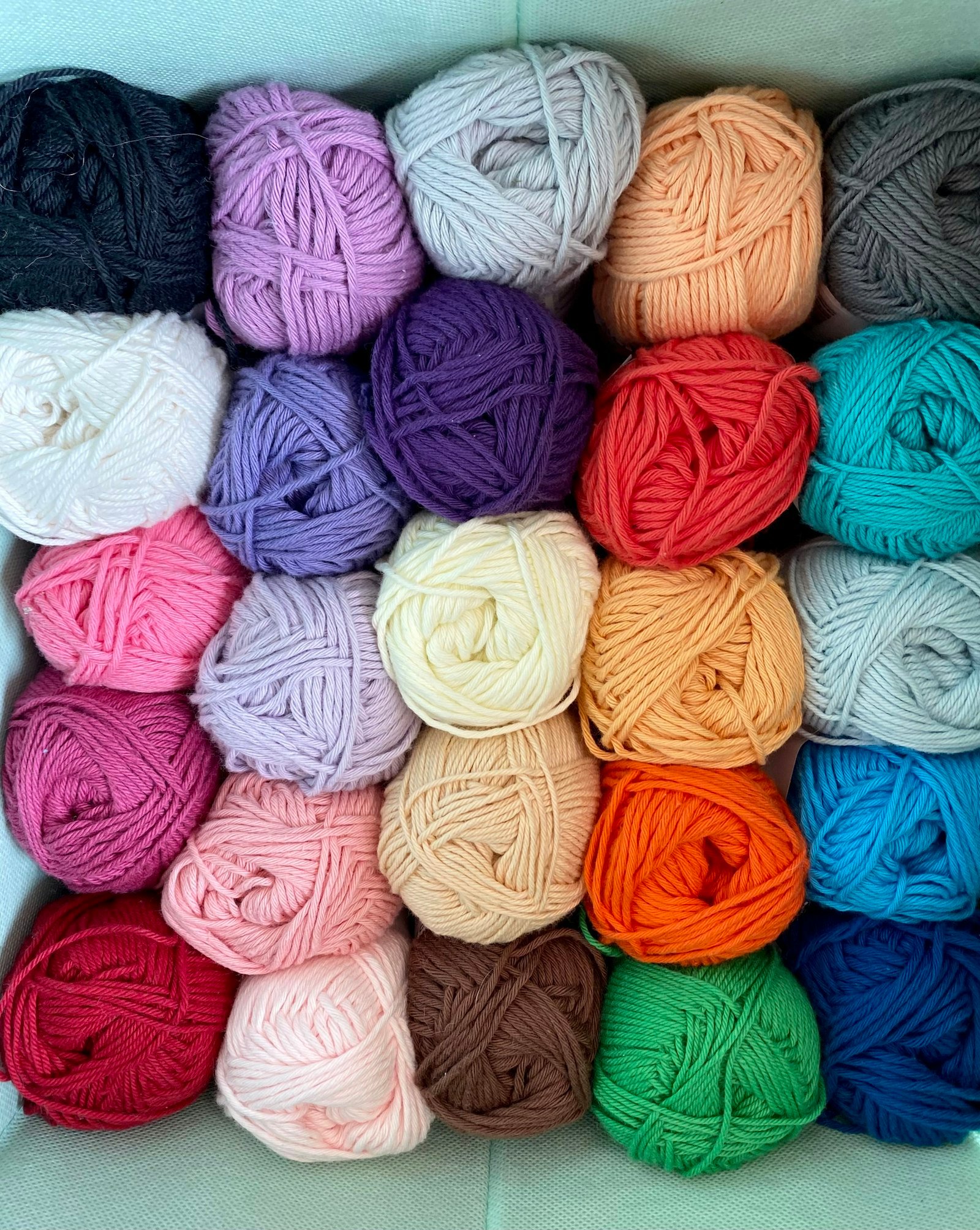
“Yarn weight” does not mean how heavy the ball is. It describes how thick the strand is. Thicker yarn makes bigger stitches and works up faster; thinner yarn gives finer, more detailed fabric.
The standard yarn weight system
Many yarn labels show a number from 0 to 7 inside a little ball of yarn symbol. Here is what each number means and the hook range usually recommended for it.
| Number | Name | Also called | Typical hook |
|---|---|---|---|
| 0 | Lace | Thread, cobweb | 1.5 to 2.25 mm |
| 1 | Super fine | Fingering, sock | 2.25 to 3.5 mm |
| 2 | Fine | Sport, baby | 3.5 to 4.5 mm |
| 3 | Light | DK, light worsted | 4.5 to 5.5 mm |
| 4 | Medium | Worsted, aran | 5.5 to 6.5 mm |
| 5 | Bulky | Chunky, craft, rug | 6.5 to 9 mm |
| 6 | Super bulky | Roving | 9 to 15 mm |
| 7 | Jumbo | Arm-knitting | 15 mm and up |
Granny’s tip: Hook ranges are a starting point. Crocheters often use a smaller hook than knitters would, especially for toys and baskets.
Fibres in a nutshell
- Acrylic: affordable, washable, huge colour range. Great for blankets and practice.
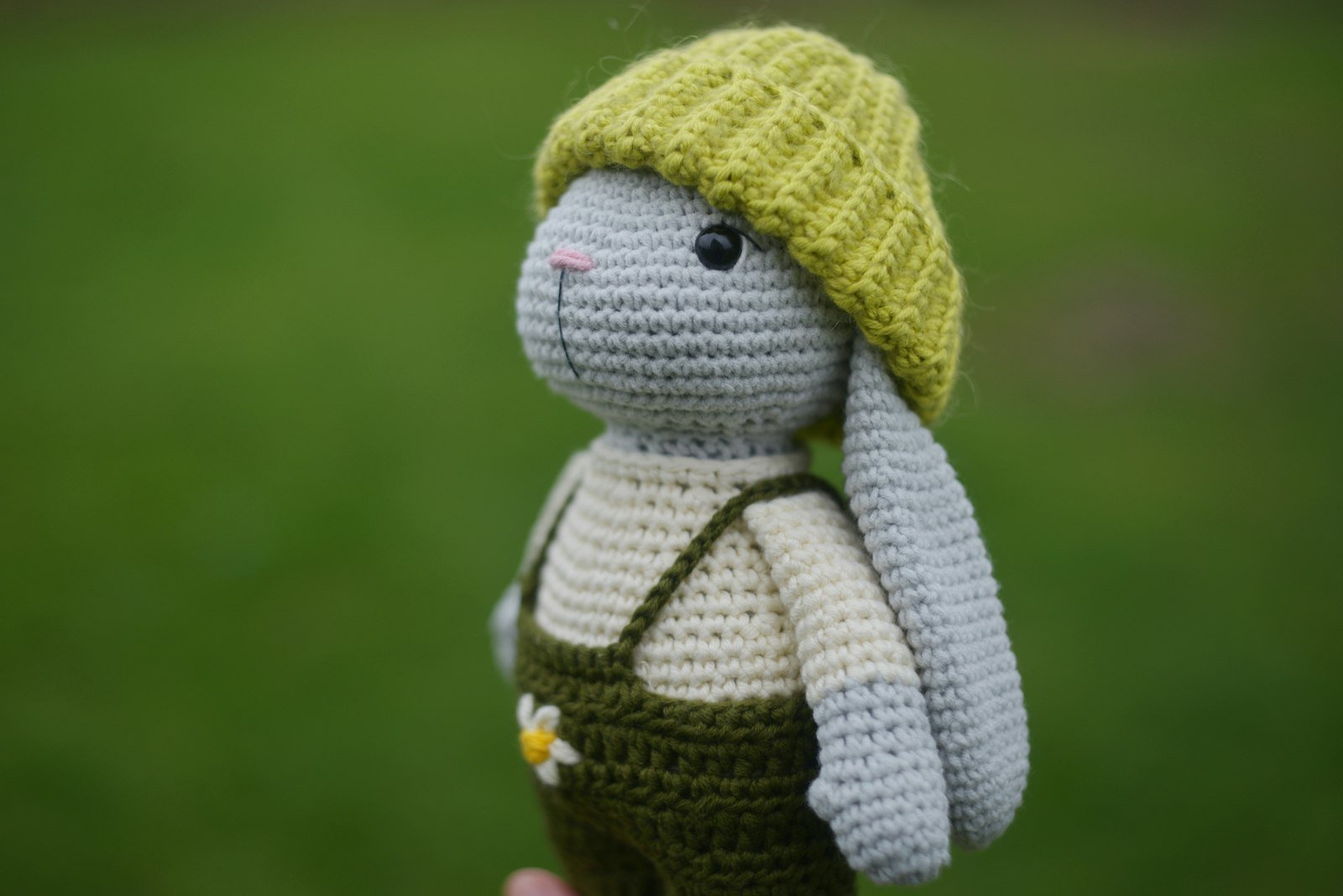
- Cotton: crisp stitch definition and no fuzz. Perfect for amigurumi, dishcloths and summer tops.
- Wool: warm, springy and forgiving. Ideal for hats and cozy wearables.
- Blends: mix the best of each, like cotton-acrylic for soft, washable baby items.
Best yarn for your first project
Choose a smooth, light-coloured worsted (4) yarn in acrylic or cotton. Avoid fuzzy, dark or textured yarns at first: they make it hard to see where to put your hook.
Leave a Reply